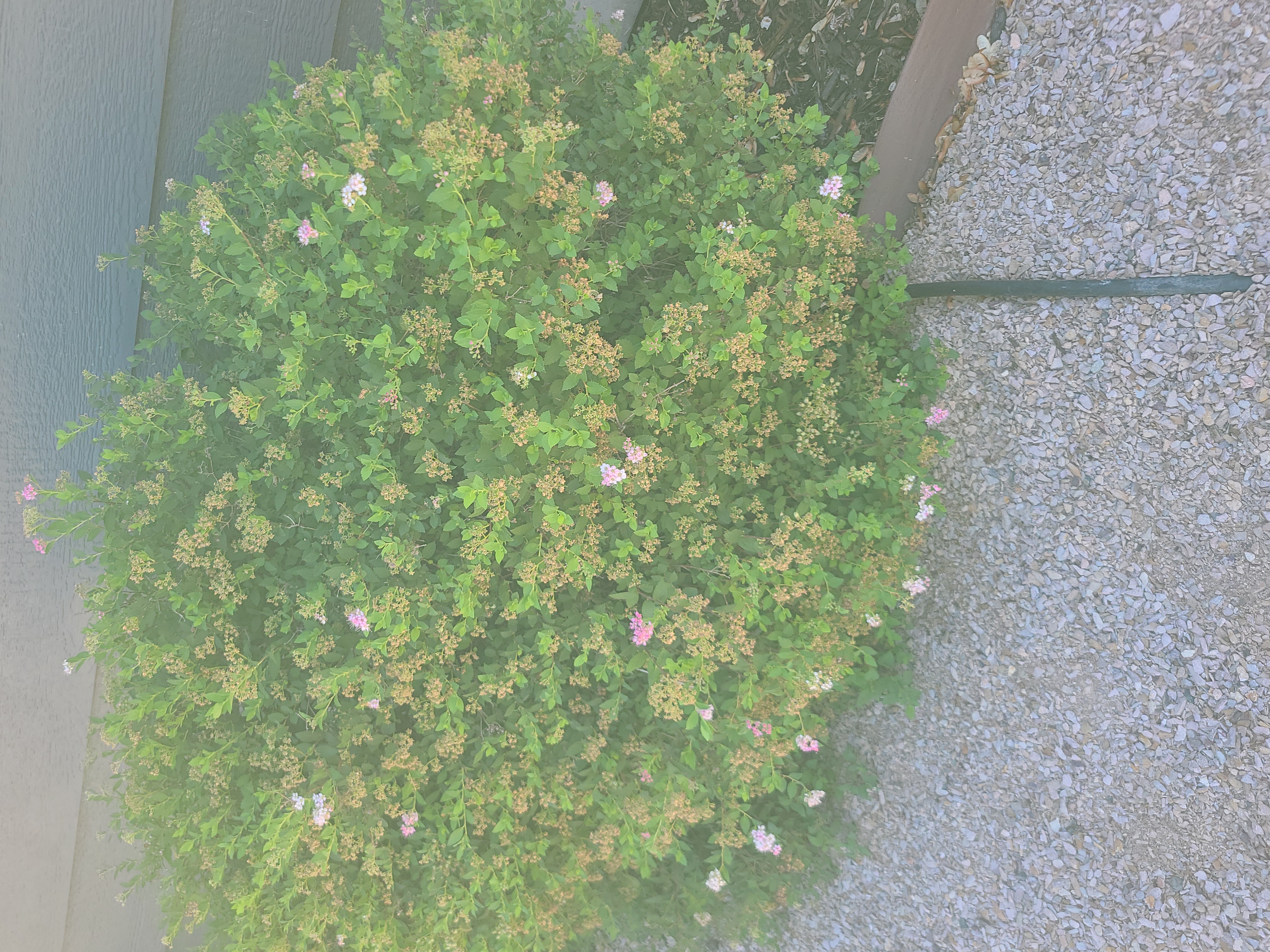
You actually have two different plants in this batch of pictures, which is why the foliage looks so different.
The first and fourth photos look very much like a delphinium, probably one of the perennial garden hybrids. The tall staked flower stalk, deeply divided leaves, and especially those little developing/dried seed capsules along the old flower spike are characteristic of delphinium.
For that one, it is clearly reaching the scruffy end-of-summer chapter now. I would cut off the spent flower stalks now, especially the brown seed-bearing portions, but leave the healthy lower green foliage for the moment. Once frost has killed the foliage and it has turned brown, the remaining stems can be cut down to several inches above the ground and the dead material cleaned away. Delphiniums are herbaceous perennials, so the visible plant essentially disappears for winter and comes back from the crown.
The browning lower leaves in your close-up don't alarm me much at this point in August. The plant has already put a tremendous amount of energy into flowering and seed production, and those old lower leaves are starting to retire. I would remove leaves that are completely brown, but don't strip off all that remaining green growth yet.
The big rounded shrub in photos two and three is Japanese spirea, Spiraea japonica, or one of its closely related hybrids/cultivars. That identification I'm considerably more confident about. The small serrated leaves, dense rounded habit and flat clusters of pale pink flowers fit it beautifully. Oregon State describes S. japonica cultivars with exactly that mounded form and pink flower clusters.
And I would give the spirea an almost opposite fall treatment:
You can snip off all those brown spent flower clusters now if your daughter wants it tidied up.
Take out anything obviously dead, damaged or broken.
But don't give the whole shrub a serious haircut this fall.
Let it naturally go dormant and drop its leaves.
If she wants to reduce its size, reshape it, or rejuvenate it, late winter/early spring before new growth starts is the better time for this type of late-blooming spirea. These bloom on new growth, so spring pruning works very well.
If it ever gets old and woody, spirea is extremely forgiving. An overgrown plant can even be rejuvenated quite dramatically in early spring.
For the same Central Oregon garden, I would also make sure both get a good deep watering before the ground freezes if autumn is dry, rather than keeping them on frequent shallow irrigation. Fall pruning that stimulates new growth is generally undesirable going into cold weather.
So the shorthand for today's cleanup is wonderfully simple: delphinium: remove the ugly spent stalks, wait on the green base. Spirea: deadhead it if desired, but save the real pruning for spring.
And the spirea, incidentally, looks terrific. That thing has turned itself into a very respectable green meatball. 🌿