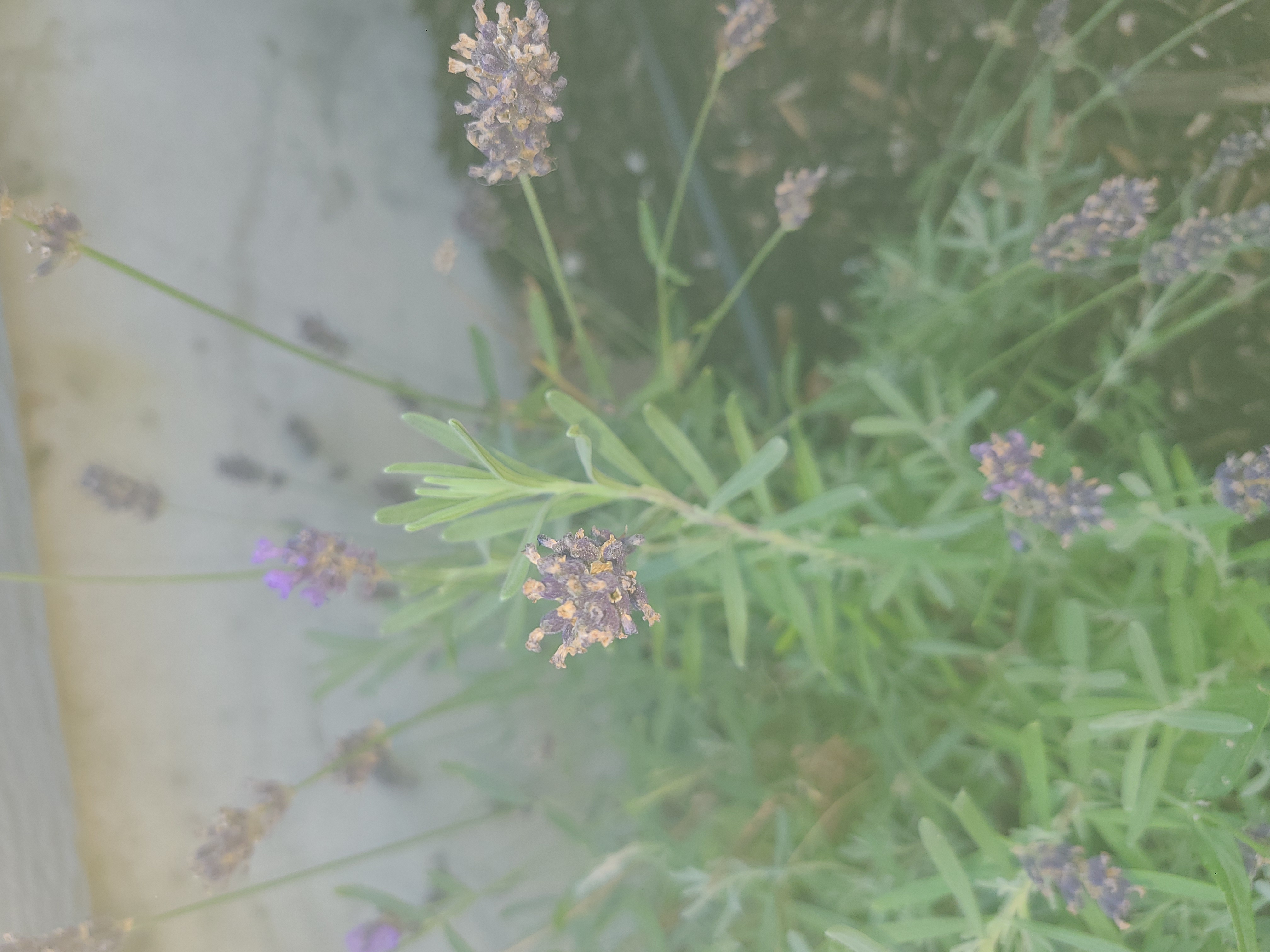
Lavandula angustifolia
Yes, this one is lavender, most likely English lavender (Lavandula angustifolia) or a closely related lavandin hybrid. From the photos alone I wouldn't try to force it down to a cultivar, but the narrow gray-green leaves and compact purple flower spikes are classic lavender. And this one gets quite different fall treatment from the phlox. I would not cut the whole plant back this fall. In a cold-winter climate, lavender is much safer going into winter with its leafy framework intact. OSU specifically recommends waiting until spring to do substantial lavender pruning, and other Extension guidance likewise warns against fall pruning in cold climates. What I would do now is pretty simple: Cut off the spent flower stalks. Follow each long flower stem down toward the leafy mound and remove the stalk without hacking deeply into the woody portion of the plant. Leave all the healthy gray-green foliage. Remove anything that is clearly dead or broken. Don't fertilize it now. You don't want to encourage tender new growth heading into frost. Gradually reduce irrigation as temperatures cool. Lavender likes excellent drainage and is much more vulnerable to sitting wet than to being kept slightly dry. Gravel or rock around the crown is generally more lavender-friendly than a thick, damp organic mulch. Then in spring, once you can see fresh growth and the worst hard freezes have passed, that's the time to shape it. A good general rule is to take off roughly the outer one-third of the leafy growth, while never cutting deeply into old bare wood that has no green growth on it. Lavender often doesn't regenerate well from old leafless wood. So visually, think of it this way: Fall: remove the flower antennas. Spring: sculpt the green cushion. One thing I want to flag from your pictures, though: the very first photo appears to include a different plant mixed in with the lavender. Those broad, heavily toothed, textured leaves are not lavender leaves. It looks like some sort of perennial mint-family plant, possibly a salvia, growing right through or beside it. I would not indiscriminately shear everything visible in that first picture as though it were all lavender. Also, those leaves in the first photo have quite a lot of chewing damage,