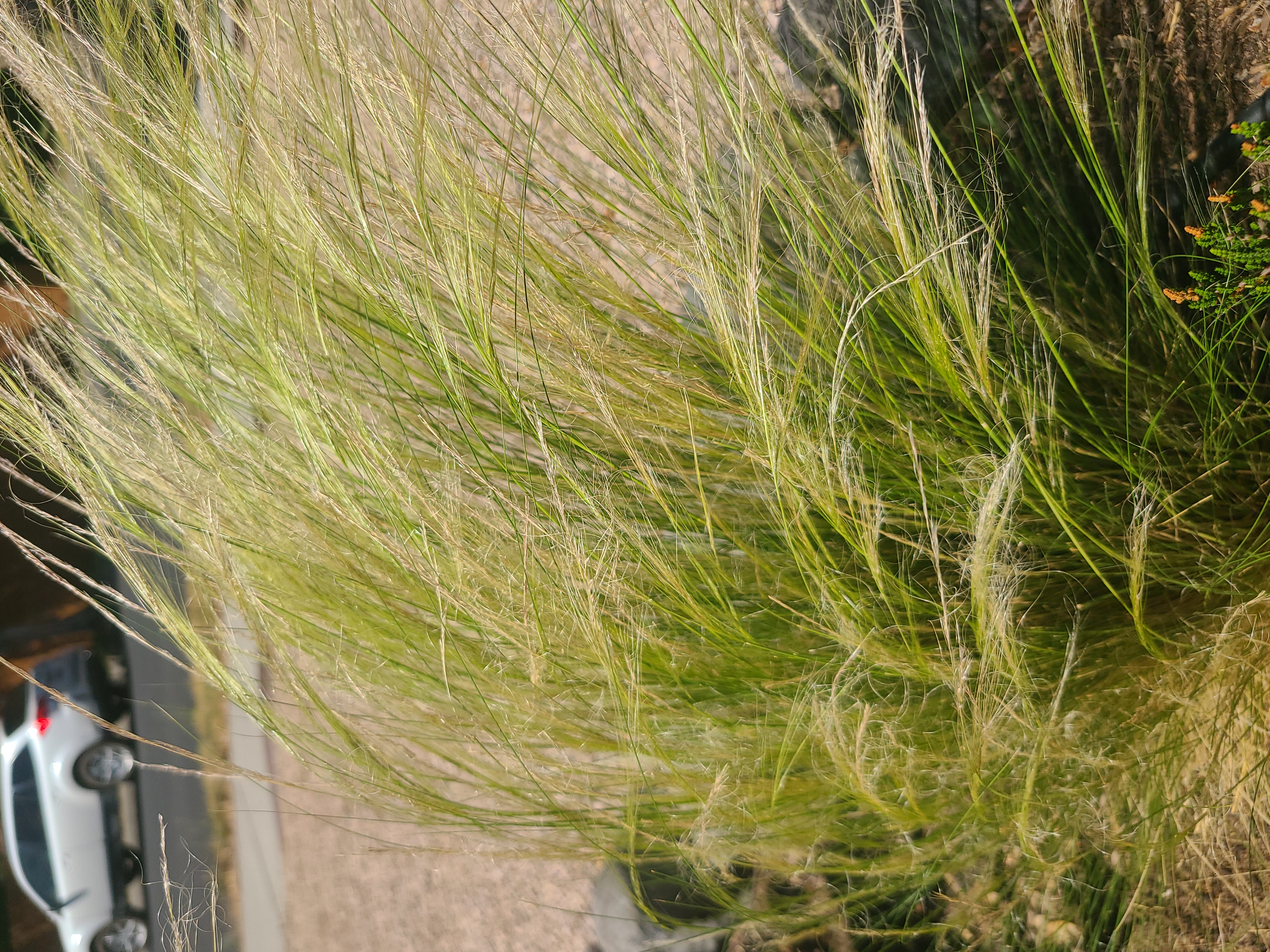
This one is almost certainly Mexican feather grass, Nassella tenuissima, also commonly sold under its older name Stipa tenuissima. The giveaway is that extraordinary mass of hair-fine leaves and the long, silky, blond seed heads that pour over the plant. Your daughter's specimen has exactly the fountain-shaped habit described for the species.
For this one, I would do almost nothing to it this fall. In fact, this is one where cleaning it up too enthusiastically now would remove much of what makes it attractive in winter.
I'd handle it this way:
Leave the whole grass standing through fall and winter. The tan, feathery foliage and seed heads are part of its winter display. OSU specifically recommends leaving ornamental grasses standing in winter and cutting them back in early spring.
Don't fertilize it in fall. Mexican feather grass is adapted to lean, dry conditions and is quite drought tolerant once established. Rich soil and lots of irrigation aren't improvements for this plant.
Keep watering modestly while the weather is still dry, particularly if this plant isn't long-established, but don't keep the soil soggy. It wants very good drainage, and excessively wet soil can lead to root problems.
In late winter or very early spring, before the fresh growth really takes off, clean it up. If most of it has turned straw-colored, it can be sheared back fairly low. University of Arkansas Extension specifically recommends shearing Mexican feather grass in late winter before new growth begins, while OSU recommends cutting ornamental grasses to a few inches above the ground in early spring.
If it comes through winter with quite a bit of green foliage still alive, I'd be gentler. Put on gloves and comb/rake the dead blond material out with your fingers rather than automatically shaving the entire clump to the dirt.
There is one thing I'd pay attention to right now, though: those beautiful silky plumes are also seed factories. Mexican feather grass can reseed very freely, and Extension sources specifically warn that it can produce thousands of seeds and escape the original planting.
So there are really two choices. If your daughter likes having little volunteer grasses appear elsewhere, leave those plumes alone and enjoy them. If she doesn't want this grass wandering around the bed and into the gravel, I'd cut off the mature seed heads before they scatter, but leave the green leafy body of the plant untouched.
And from the photos, I would not interpret the blondness as the plant dying or being neglected. That green-to-wheat coloration is normal for Mexican feather grass. It naturally develops buff-colored foliage and seed heads as the season progresses.
Of the plants you've shown me so far, this one is probably the easiest fall job: admire it, restrain the seeds if desired, and postpone the haircut until spring. 🌾