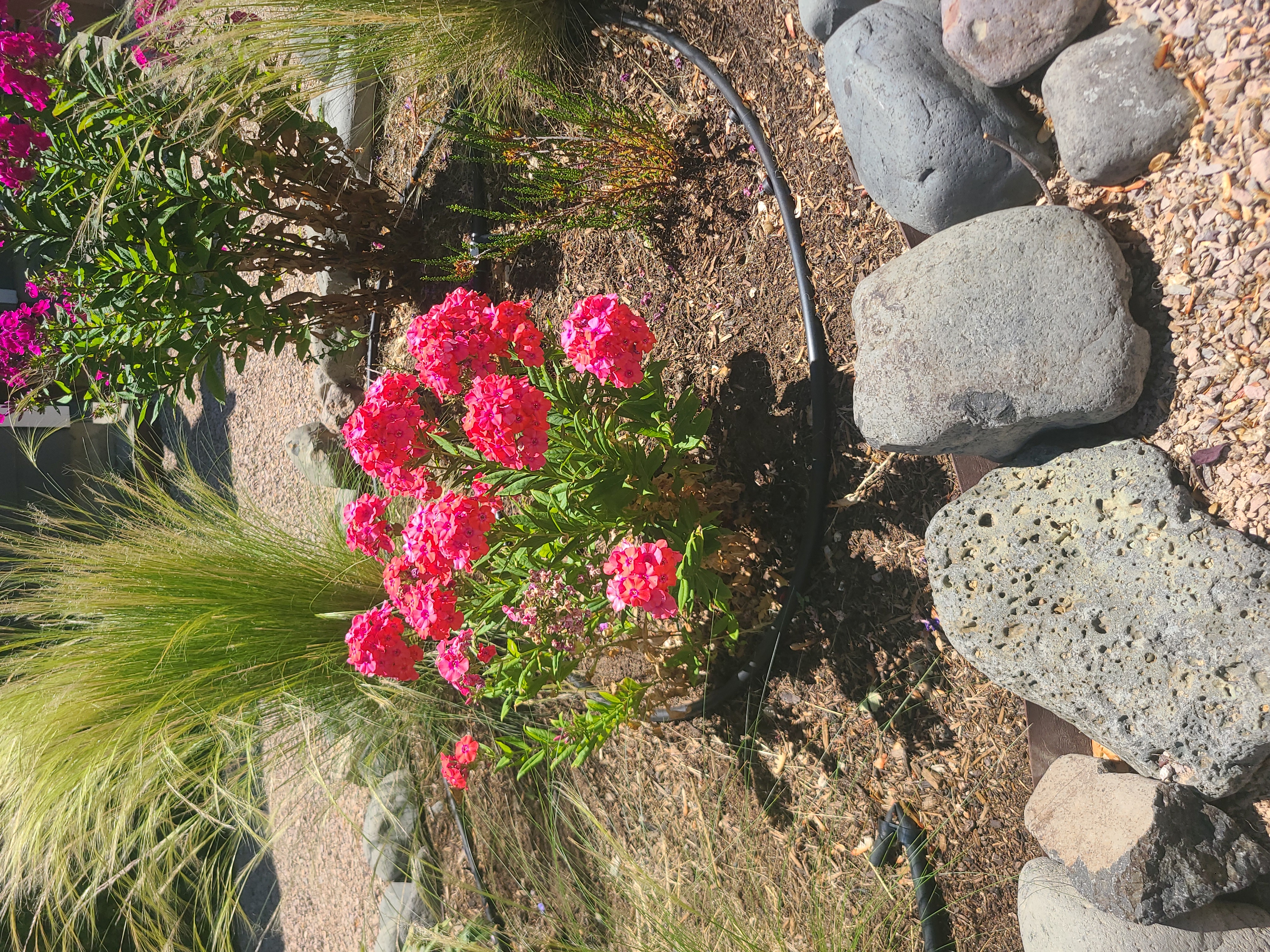
Yes, this is another phlox, and this one looks like tall garden phlox, Phlox paniculata, probably a different cultivar from the coral-red one in your earlier photos. The taller stems, opposite lance-shaped leaves, and those loose rounded clusters of five-petaled magenta flowers all fit P. paniculata. I wouldn't try to name the cultivar from the flower color alone because there are many nearly identical magenta varieties.
And this one looks as though it has quite a bit of flowering left in it, so I would not do the big fall haircut yet. 🌺
What I would do to this plant now
The useful late-summer job is selective deadheading. When an individual flower cluster is mostly finished, follow that flower stem downward and cut it just above the first healthy pair of leaves or a set of developing side shoots. Don't just whack the entire plant down. Deadheading keeps it attractive, can encourage smaller secondary blooms, and prevents seedlings that generally won't reproduce the cultivar faithfully.
Looking closely at yours, there are lots of unopened buds and partially flowering heads, so I'd leave those completely alone. I'd only remove genuinely spent heads and any crispy brown foliage down around the base.
I would also leave the healthy green leaves on the plant for now. They're still doing useful work for the crown and roots.
Then, after frost
Assuming this is the same Central Oregon garden, I would wait until frost has killed the upper growth and the leaves have browned. OSU's Central Oregon guidance recommends cutting herbaceous perennials back to about 6–8 inches above the ground in late fall or early winter. Those short stems catch snow, which provides some winter insulation. Leaving the whole plant standing until spring is also acceptable.
Phlox adds one wrinkle: powdery mildew is its famous nuisance. Good air circulation and watering at soil level rather than wetting the leaves both help enormously. Removing the dead foliage at season's end can also reduce the amount of disease material overwintering around the crown.
So for this particular plant, I'd do:
Now: deadhead spent flower clusters and pull out dead/brown material underneath.
Through fall: keep watering normally while the plant is green. Don't start feeding it heavily now.
After a killing frost: cut the dead stems to roughly 6–8 inches and remove the dead leaves from around the crown.
If you see white powdery mildew this fall, be more aggressive about removing and discarding all affected foliage rather than leaving it lying around.
After the ground has lightly frozen, apply roughly 2–5 inches of winter mulch around the root zone, but don't bury the crown under a wet mound. OSU recommends waiting until the ground has lightly frozen because the goal is to keep soil temperatures stable rather than keep the soil warm.
During a very dry Central Oregon winter with no snow cover, OSU recommends watering perennials about every 4–6 weeks when the upper soil has thawed enough to accept water.
One thing I'd give your daughter's planting scheme high marks for horticulturally: that drip irrigation is excellent for phlox. Phlox wants moisture, but it really doesn't want its foliage repeatedly wetted. That's one reason these plants look so clean despite the summer heat.
Also, comparing the two phlox plants, I think this magenta one is the taller, more classic paniculata form, whereas the coral one looks like it may be one of the newer compact cultivars. Same basic fall treatment, but I would prune them individually rather than treating the whole flower bed as one mass.